
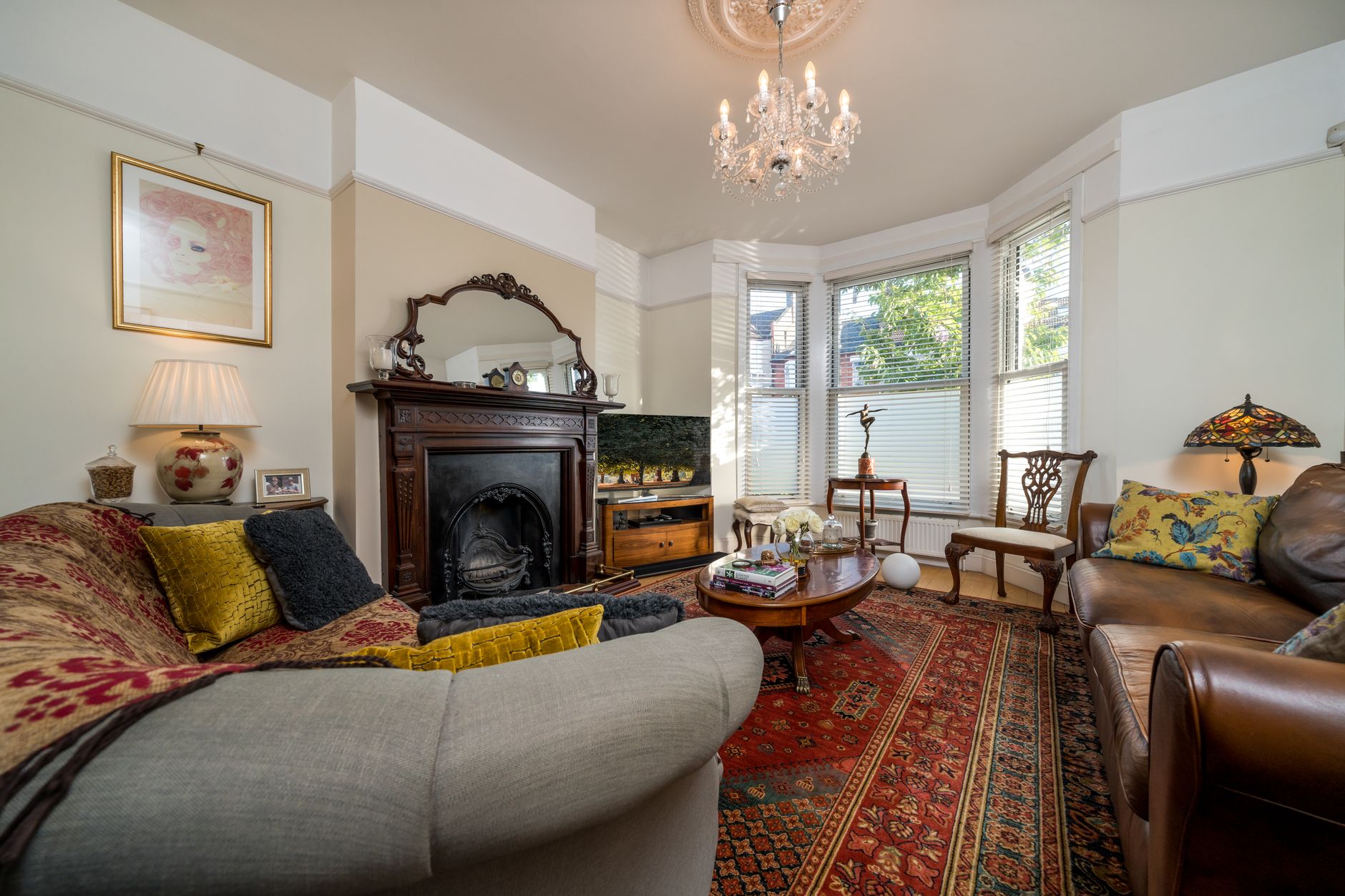
The firebox keeps a record of every storm that reached it
Tell Us About the Water
Which room, which wall or ceiling, and whether storms make it spread. We call back to agree a visit.
Scope of the job
Water that gets into a chimney often shows at the fireplace before anywhere else: an orange, flaking damper, white powder on the firebox brick, a damp smell when the weather turns, a tide line on the face above the opening. This visit looks at all of it from the room side, checks the firebox joints and the hearth for cracks, and tells you whether the cause sits up on the roof.
What the inside of the fireplace tells us about the top of the chimney
A fireplace inspection is done from inside the room. Everything on it can be reached with an arm and a lamp from the hearth, and that includes the surround and the trim as well as the box itself. For most companies that is a fire safety check. It is that for us too, but this firebox sits at the bottom of a tall brick tube open to the weather, and so it collects evidence. A white powdery crust on the back wall is mineral salt, carried through the brick by water and left behind when it dried. Orange streaks running down from the throat mean the damper is rusting, which only happens if rain is reaching it. Joints that scratch out like sand with a fingernail have been wet and dry too many times. A hearth with a dark tide line across it has had water pooling on it. Each of those is a clue about the cap, the crown or the brick far above the room.
We also check the parts that matter whether or not water is involved. The firebrick gets looked at for cracks wide enough to let heat reach the wood framing behind it. The damper gets opened and closed through its full swing, so we know whether it seals or stays stuck partway. The hearth gets checked for gaps where an ember could drop through, and we measure how close the mantel and any wood trim sit to the opening against the clearances the fire code sets. Gas units get a look at the burner, the logs and the glass. Everything we find goes into a written list in plain words, grouped by what to fix now, what to watch and what is fine. Where the list points at water, it names the part on the roof we think is at fault, so the next step, if there is one, is aimed at the cause.
Who books a fireplace inspection and what happens next
The usual reasons are simple. A family has moved into a house in San Dimas or Walnut and wants to know if the fireplace is safe before the first cold night. Someone has noticed a smell or a stain and wants to know whether the fireplace is involved. A seller wants a clear account of the fireplace before buyers start asking. In each case the room side is where the answer starts, and in many cases it is where it ends: the firebox is sound, the damper works, the hearth is intact, and the job is a sweep or nothing at all. When the marks point upward, the report says so directly and suggests the visit that will settle it, usually a full chimney inspection that adds the roof, or a Level 2 at $370 when the flue lining itself needs to be seen on camera.
If repairs come out of the visit, each one gets its own written price. A rusted damper might need a new plate, or a top sealing damper that also keeps rain out. Cracked firebrick might need a few bricks replaced or a full new firebox lining. A stained hearth might need nothing once the leak above it is closed. We put the water source first on the list because fixing the firebox while rain is still coming down is money spent twice. You decide what to do and when; nothing starts until you say so in writing. To book, use the contact page, tell us whether the fireplace burns wood or gas, and describe any stain or smell you have noticed and where it is. That is enough for us to bring the right tools and plan the visit around the room.
Four Habits on Every Fanning Chimney Solutions Job
Inside Out
We start at the stain and work up to the roof
Active Drips First
Water coming in now moves up the list
Price on Paper
A written figure you approve before work
Checked Again
The repaired spot is tested before we pack up
Where we do fireplace inspection
Pick a city to read how its roofs, brick and weather shape this work. Our four focus cities carry the longest write-ups.
CA
Fireplace Inspection in San Dimas
Our home town grew mostly between the 1960s and the 1980s, and 63% of its homes predate 1980. When a brown ring shows on a family room ceiling here, we start at the crown and follow the water down past the cap and flashing to the stain.
Open the city pageCA
Fireplace Inspection in Glendora
Plenty of post-war houses here kept the original brick or block chimney and later switched to gas logs. Gas makes little smoke, so a musty smell beside the hearth is often the first hint that rain is getting past the crown or flashing.
Open the city pageCA
Fireplace Inspection in Claremont
16% of homes here went up before 1950, and those older houses likely carry site-built brick chimneys. Worn joints in that brick act like tiny gutters, so the spalling face outside can have a matching damp patch on the wall inside.
Open the city pageCA
Fireplace Inspection in Walnut
Practically all housing here is detached, and the newer tracts often got factory-built metal fireplaces. With those, water slips in at a rusted chase cover or loose cap and turns up as a stain on the wall beside the firebox.
Open the city pageMore from the Fanning Chimney Solutions list
Chimney Sweep
Brushing and vacuuming the flue, with an eye on wet creosote, rust flakes and tile stains that point to a leak higher up.
Open →Chimney Inspection
A Level 1 visual check of every reachable part, read for water first: top, cap, roof seam, mortar and the stains below them.
Open →Chimney Repair
Fixes for the parts rain wears out on a chimney: loose brick, open joints, rusted metal, a split top and tired roof seams.
Open →Fireplace Repair
Firebox joints, panels, damper and hearth repaired, often after years of water dripping down the flue have worn them out.
Open →Chimney Level 2 Inspection
Video of the whole flue plus attic and roof checks, used to find hidden water damage, cracked tiles and quake damage.
Open →Chimney Cap Installation
Stainless caps measured on the roof so rain, leaves and animals stay out of the flue, quoted after we measure. Flue count, cap size and metal decide the price.
Open →Chimney Flashing Repair
The metal seam where brick meets roofing is the most common leak point; we replace failed pieces and seal it properly.
Open →Chimney Masonry Repair
Flaking faces, sandy joints and white salt marks are water signs; we repoint, replace brick and stop the moisture feeding them.
Open →Chimney Rebuilds
When water has loosened too many courses to patch, we take that section apart and relay it under a new top.
Open →Fireplace Cleaning
Firebox, glass doors and brick face cleaned of ash, soot and the musty film that damp weather draws out of old fires.
Open →Gas Fireplace Cleaning
Gas units cleaned at burner, pilot, logs and glass, and the vent top seal checked for rain getting in.
Open →Gas Fireplace Repair
Pilots that drop out, igniters that fail and valves fouled by rust from a leaking vent, traced and replaced part by part.
Open →Fireplace Remodel
New face, mantel or hearth for a fireplace, planned after we fix any water staining or damp brick the old finish was hiding.
Open →Fireplace Inserts
A sealed insert with its own liner and a capped top, so rain stops reaching the firebox; gas inserts $2,650 to $5,250.
Open →Pellet Stove Repair
Pellet stoves that jam or quit, often because damp pellets or a leaking vent have clogged the feed and fouled the parts.
Open →Wood Stove Repair
Leaky door seals, warped baffles and rusted stovepipe on wood stoves, with the roof jack checked for the drip that rusts them.
Open →Gas Logs
Vented gas log sets fitted to an existing firebox, with the cap and damper checked so rain and drafts stay out.
Open →Chimney Seismic Retrofit
Steel bracing, straps or a lighter top section for older brick chimneys, chosen after we have checked the mortar is worth holding.
Open →Chimney Crown Repair
A split chimney top is where most masonry leaks begin; we seal light cracking or pour a new top that sheds water.
Open →Dryer Vent Cleaning
Lint packed into the duct, a crushed hose or a flap stuck at the wall outlet, cleared so the dryer vents properly again.
Open →Chimney Liner Installation
A stainless liner run through a cracked or bare flue, capped and sealed at the top so neither exhaust nor rain reaches the brick.
Open →Chimney Leak Repair
Water inside near the chimney traced to its real source, roof seam, brick, crown or cap, then fixed there; $525 to $3,150.
Open →Chimney Waterproofing
Repellent that lets the brick dry while shedding rain, used as the last step after repairs, never instead of them.
Open →Chimney Damper Repair
Rusted, warped or seized dampers freed, repaired or replaced, with top-sealing units where the throat cannot be saved.
Open →Chimney Chase Cover
The metal lid on a wood-framed chimney, replaced when it rusts through or sags and lets rain run down into the chase.
Open →